

A visit to the magnificent mile in Chicago is a must. Missing it is like not seeing Fifth Avenue in New York. Let’s start exploring Chicago’s magnificent mile. We start on the south west side of DuSable bridge at the top of Michigan Avenue.
DuSable Bridge

The bridge is named after Jean Baptiste Point du Sable. Believed to be born in Haiti he is regarded to be the first permanent non native American settler in what is now Chicago. He was highly successful and played a significant role in the development of Chicago. An interesting fact, the DuSable bridge is one of 38 movable bridges that cross the river with the first one being constructed in 1834 at Dearborn Street.

On the north and south pylons of the bridge there are some detailed relief sculptures. The one’s on the south pylons are entitled “Defense” highlighting the Fort Dearborn massacre of 1812, and “Regeneration” depicting the rebuilding of Chicago after the great fire in 1871. Meanwhile on the north side you can see “Discoverers” and “The Pioneers” honouring the first European explorers to discover the area in 1673.
Wrigley Building
Walking north across the bridge you’ll see the iconic Wrigley Building. Commissioned by the Wrigley Chewing Gum Company the building was completed in 1924. It was designed by architects Graham Anderson Probst and White. The white terra cotta exterior was inspired by the White City, part of the World’s Columbian Exposition which was held in Chicago in 1893.

The building was designed using six shades of white terra cotta which get brighter as the building gets higher. The Wrigley Company was headquartered here until 2012 when it moved to a new facility elsewhere in Chicago.
Chicago Tribune Building
Opposite the Wrigley Building is the Tribune Tower, a 463 foot tall gothic style building built for the city’s largest newspaper, the Chicago Tribune.


Designed by architects Howells and Hood, it was completed in 1925 to celebrate the 75th anniversary of the newspaper. The buildings facade is made from Indiana limestone and is famous for having fragments of well known structures embedded into the walls at street level. You’ll find pieces from the Parthenon, the Great Wall of China, the Coliseum and many others. Check out the stone archway entrance which contains carvings of characters from Aesop’s Fables. The newspaper sold the building in 2018 and moved to other premises in Chicago.
Magnificent Mile
Walk down Michigan Avenue and start exploring Chicago’s magnificent mile and you’ll find world class shopping with most major retailers represented. Saks Fifth Avenue, Nike, Neiman Marcus and the world’s largest Starbucks are all here.

For even more shopping there are several multi story malls along the magnificent mile. The shops at North Bridge, Water Tower Place and The 900 shops.
If shopping’s not your thing then just enjoy the walk, take in the atmosphere of the city, maybe explore a few of the side streets away from the crowds, and never forget to keep looking up. Those skyscrapers are incredible.
Water Tower and Pumping Station
At 800 North Michigan Avenue is the Chicago Water Tower and Pumping Station. Built in 1869, the buildings are some of the lucky few that survived the Great Chicago Fire of 1871. At the time Chicago had a problem with an inadequate water supply as Lake Michigan’s near shore water was too polluted to use. The solution, a water supply tunnel system designed by Chief Engineer Ellis S. Chesbrough that extended two miles off shore to a water intake crib. Architect William Boyington was tasked with building the pumping station and the water tower and gave the city fresh clean water.
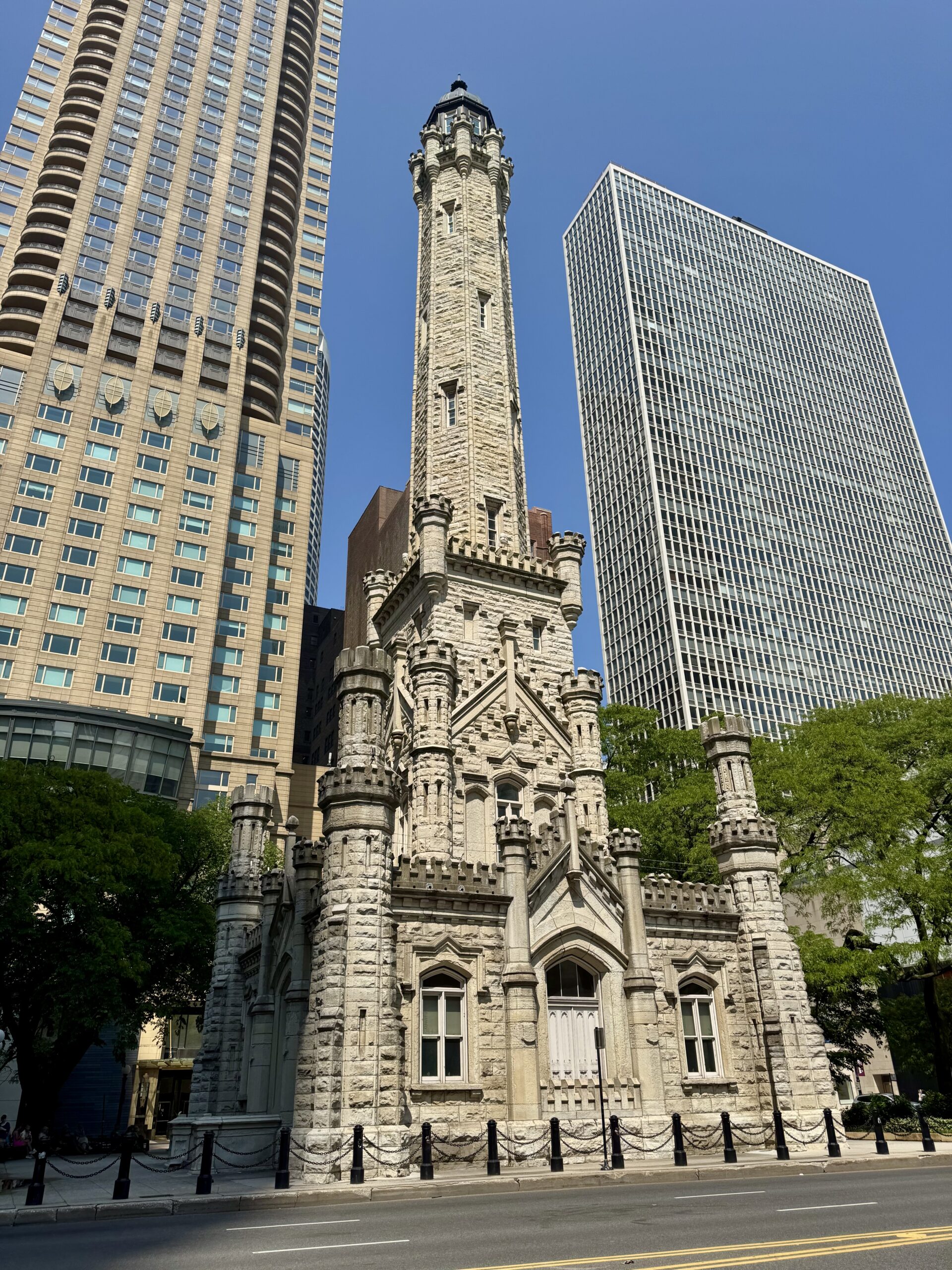
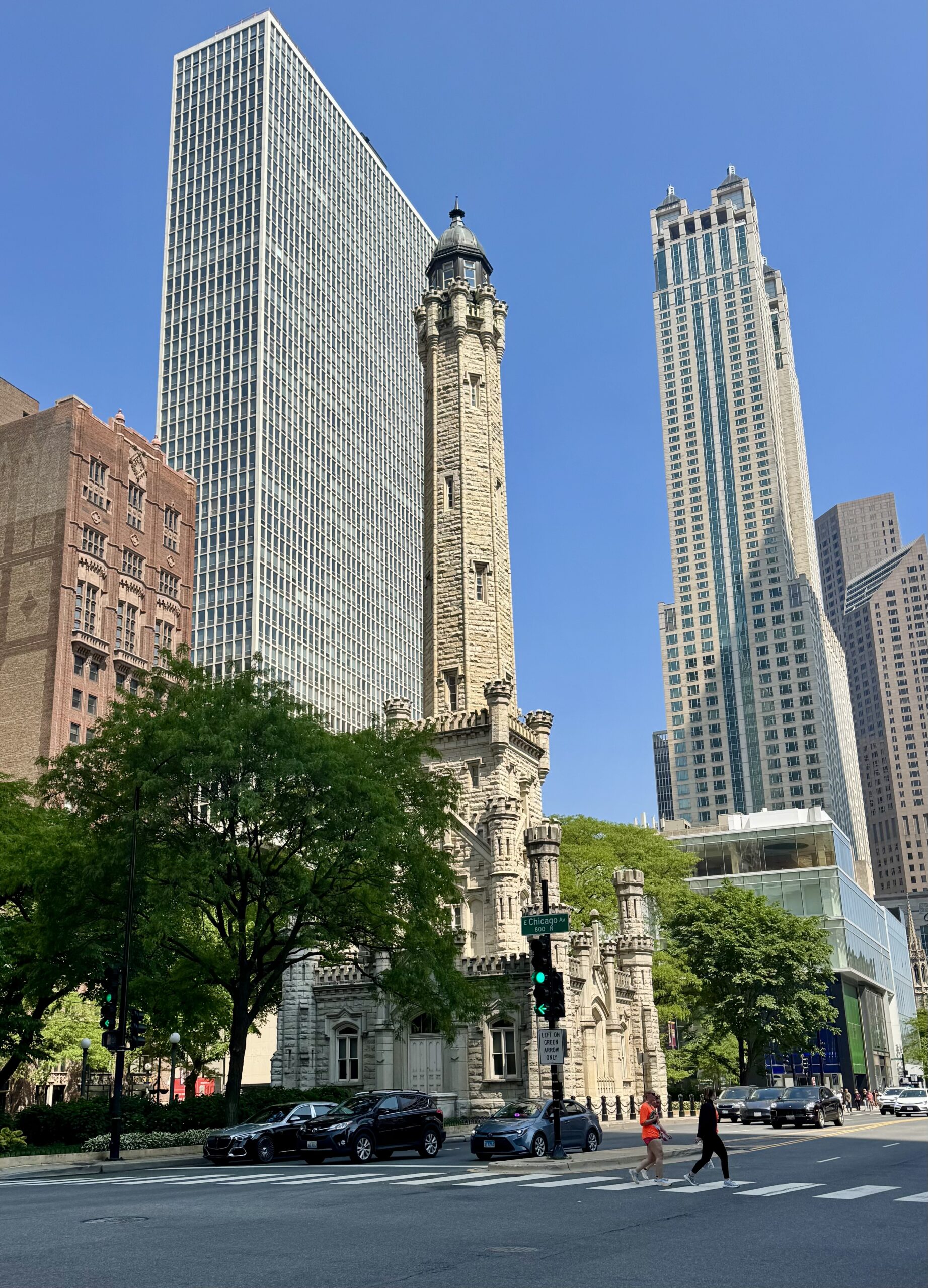
The 154 foot tower and Gothic revival castle are built with yellow Joliet limestone. Today the buildings are home to an art gallery and an award winning theatre company.
875 Michigan Avenue
A building you cannot miss and one of Chicago’s great modern skyscrapers is the John Hancock Centre, although these days it’s just called 875 Michigan Avenue. At 1128 foot and 100 stories tall the building was completed in 1969. Designed with a unique X bracing which reduced the need for internal columns allowing more internal floor space. This design also makes it resistant to high winds and paved the way for the taller modern skyscrapers we see today. To get some amazing views of the city and lake go up to 360 Chicago on the buildings 94th floor. There’s more information here


Fourth Presbyterian Church
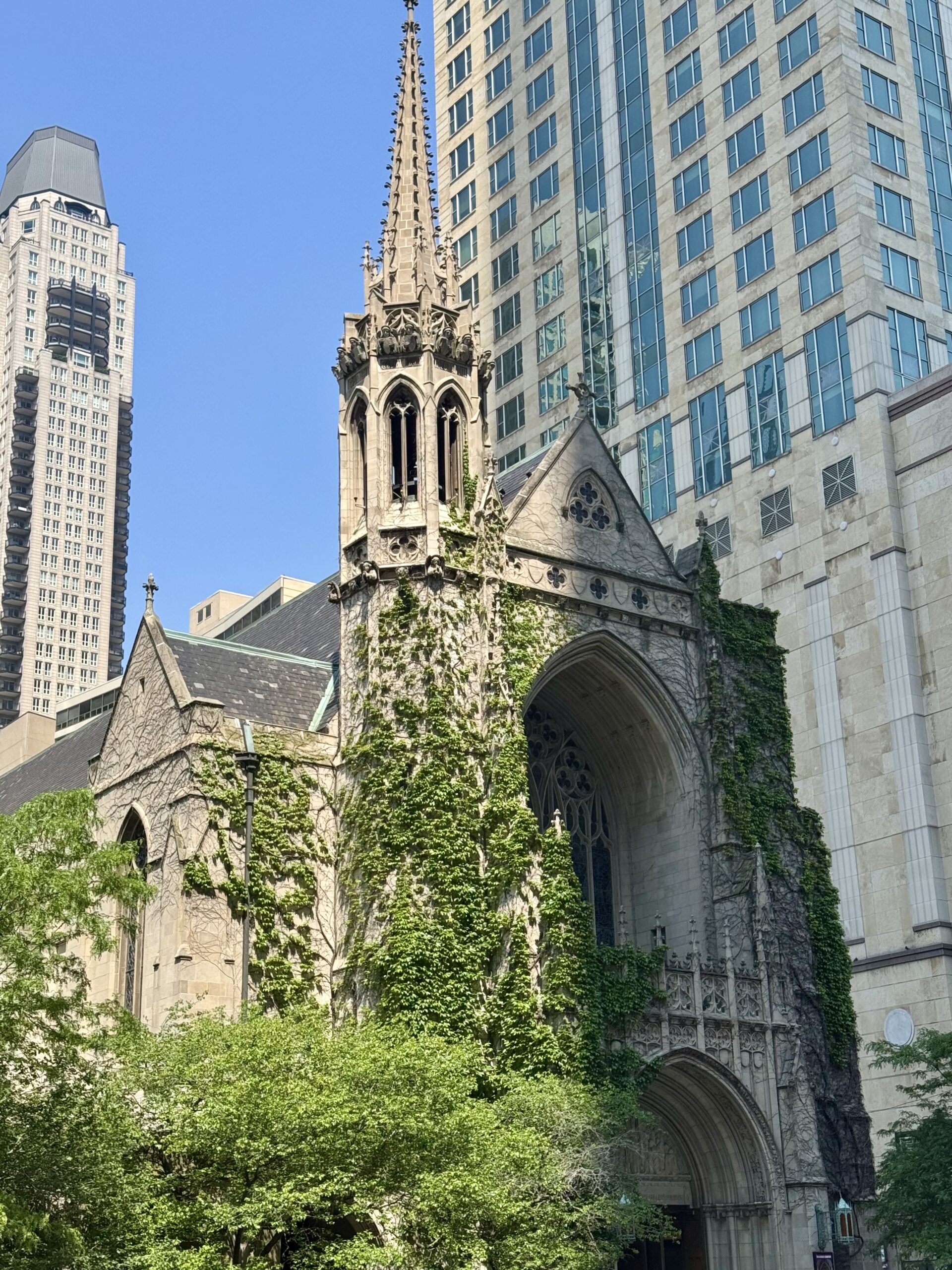
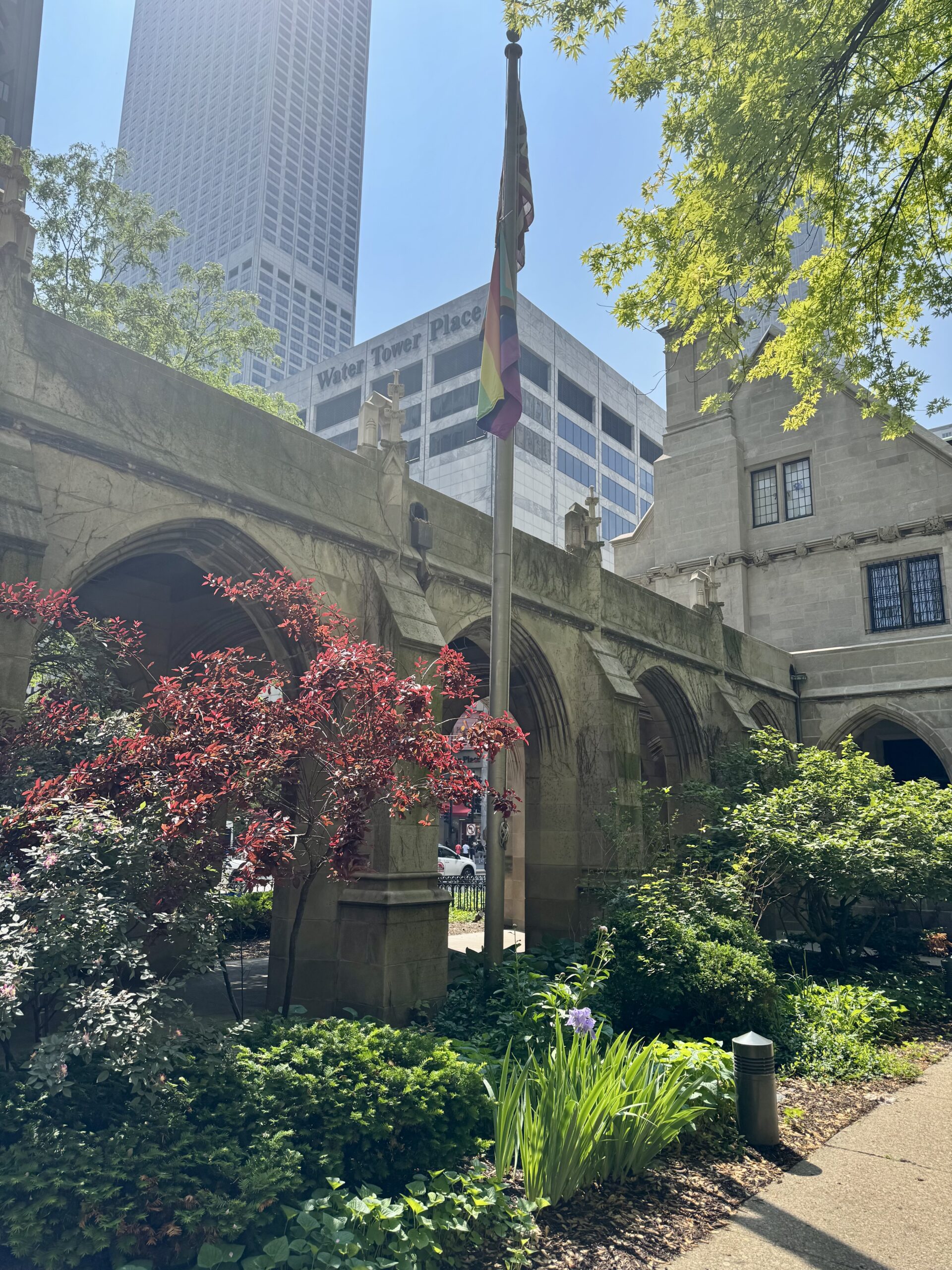
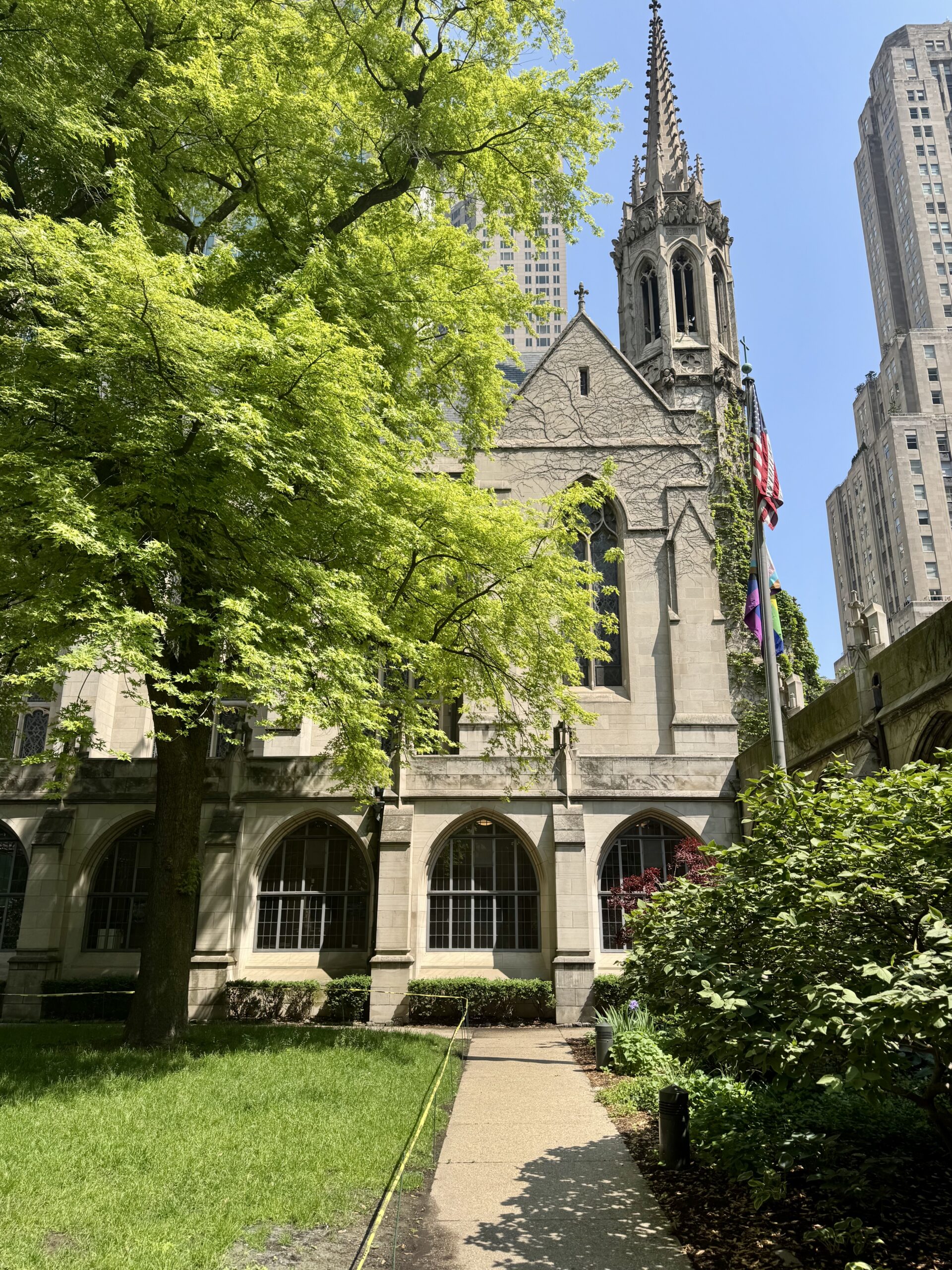
Opposite 875 North Michigan Avenue is the Fourth Presbyterian Church, and it’s the second oldest building on Michigan Avenue after the water tower and pumping station. It was completed in 1914 and is an amalgamation of the English and French Gothic styles. This is a lovely little spot to get away from the crowds, because it has a pretty garden and is also worth a quick Look inside.
Oak Street Beach
Finally at the far north end of Michigan Avenue is Oak Street Beach, the perfect place to spend a day enjoying the sun, playing volleyball and relaxing in those warm summer months, for instance. Take the underpass to make sure you get to it safely. It’s also nice to take a walk along the lakeshore in the winter, just make sure you wrap up warm against those famous Chicago winds.

So I hope you’ve enjoyed exploring Chicago’s magnificent mile with me. If so keep an eye out for more travel related stuff coming soon.
Like what you see? To explore other cities and destinations around the world just click here